
Industrial Operational Intelligence Platform
PIPER integrates production, maintenance, energy, metallurgy, and cost data into a unified operational intelligence platform. Connect your industrial systems, contextualize information, and visualize operational performance from a single platform.
Data Historian Industry 4.0 Data Mangement Industrial Data Analytics Real-time Monitoring for Mining and Energy Digital Twin for Industrial Operations
What Is an Operational Intelligence Platform?
An Operational Intelligence Platform is a software infrastructure that connects, stores, contextualizes, and visualizes industrial data in real time, enabling engineers, supervisors, and managers to understand operational performance and make better decisions.
Unlike a traditional historian, which primarily stores time-series data, or a control system such as SCADA, DCS, or PLC, which operates the process in real time, an Operational Intelligence Platform adds a layer of operational context.
This context connects data to the actual structure of the operation—plant, area, line, equipment, and variable—making it possible to move from simply viewing data to understanding processes, detecting deviations, and identifying improvement opportunities.
PIPER combines industrial data collection, historization, contextualization, analytics, and visualization in a unified platform that supports day-to-day operations and broader digital transformation initiatives.
From Disconnected Industrial Data to Unified Operational Intelligence
Industrial operations generate large volumes of information from SCADA, PLCs, sensors, historians, laboratories, ERP systems, and manual records. Without a platform that integrates and contextualizes this information, obtaining a reliable view of operations can require multiple systems and manual processes.
PIPER helps overcome these challenges:
- Data silos: Information distributed across different systems and departments.
- Manual reporting: Time spent consolidating and preparing operational information.
- Lack of context: Data that is not connected to equipment, processes, or operational units.
- Limited visibility: Difficulty analyzing production and asset performance.
- Delayed decisions: Information that becomes available after an event has occurred.
- Data not ready for analytics: Information that requires integration and contextualization before it can be used effectively.
One Platform to Understand Your Operations
PIPER connects industrial data, organizes it according to the operational context, and transforms it into actionable information for operators, engineers, supervisors, and business leaders.
A Unified Platform for Industrial Data, Context, and Analytics
PIPER organizes the industrial data lifecycle into an integrated architecture.
1. Connect
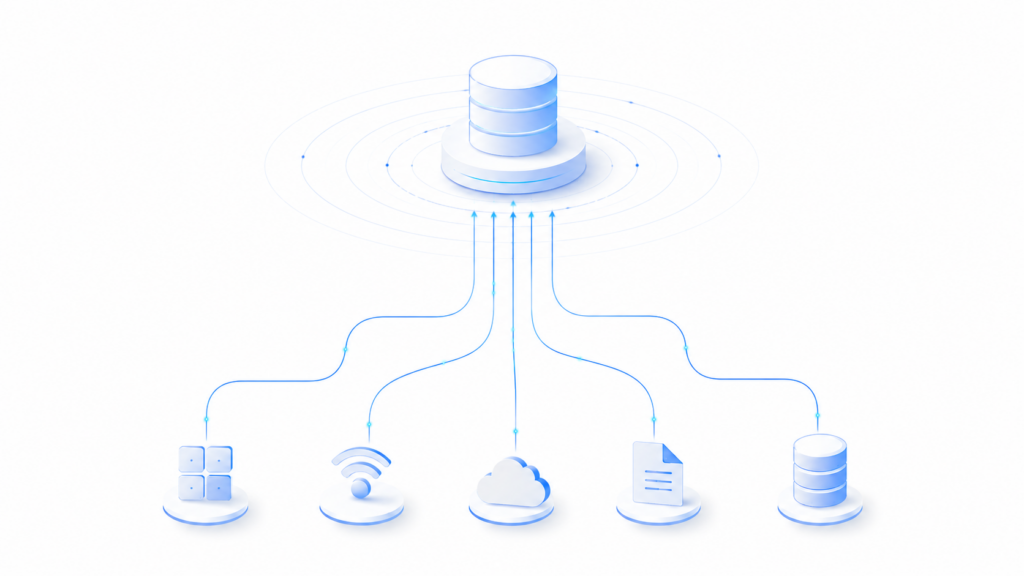
PIPER Collector
collects real-time data from SCADA, PLCs, sensors, control systems, and other industrial sources.
PIPER Forms
captures manual readings, inspections, and operational records that do not come from automated instrumentation.
Digitize information from your manual processes
2. Store
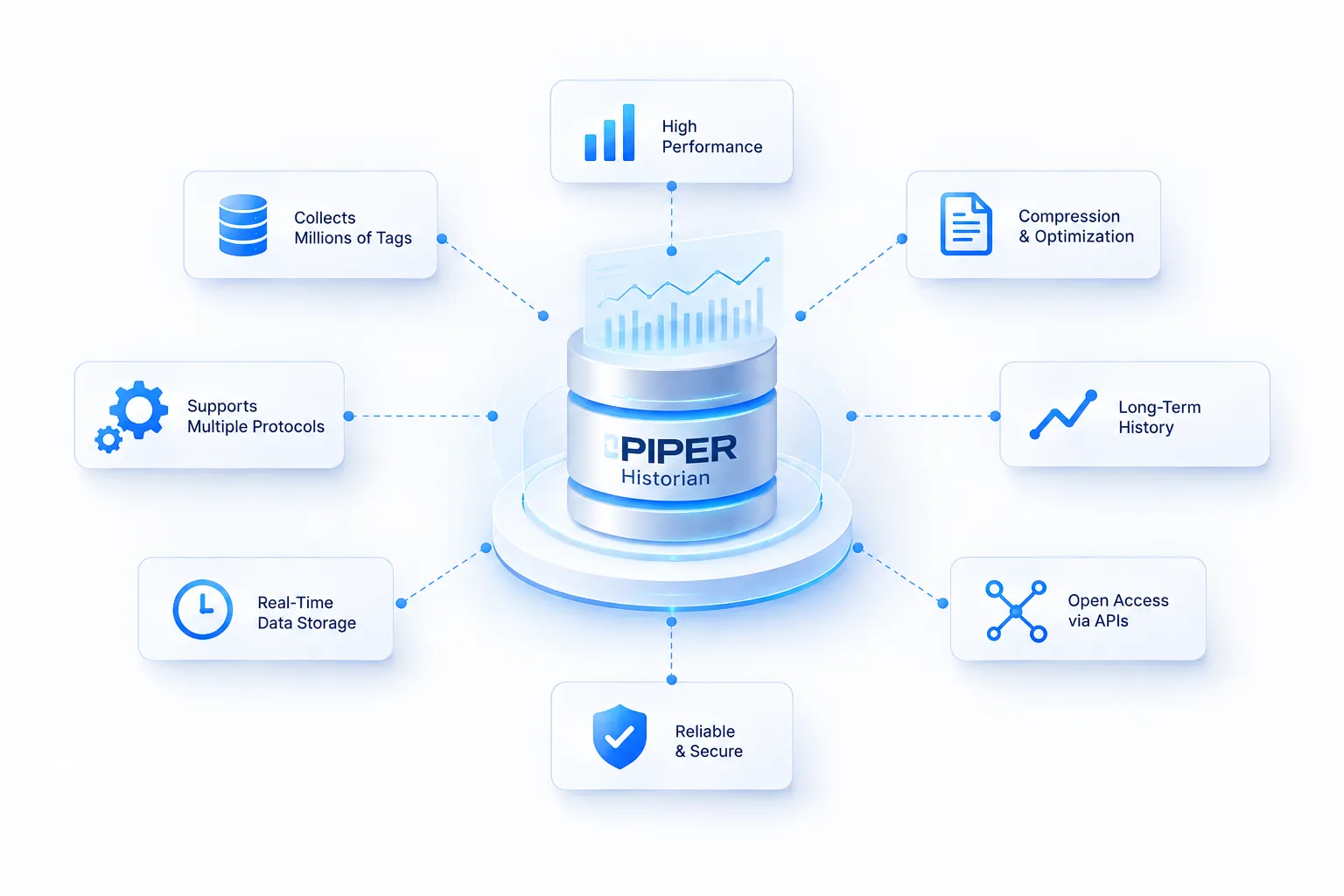
PIPER Historian
stores and retrieves large volumes of high-resolution industrial time-series data, enabling fast access to historical information.
3. Contextualize
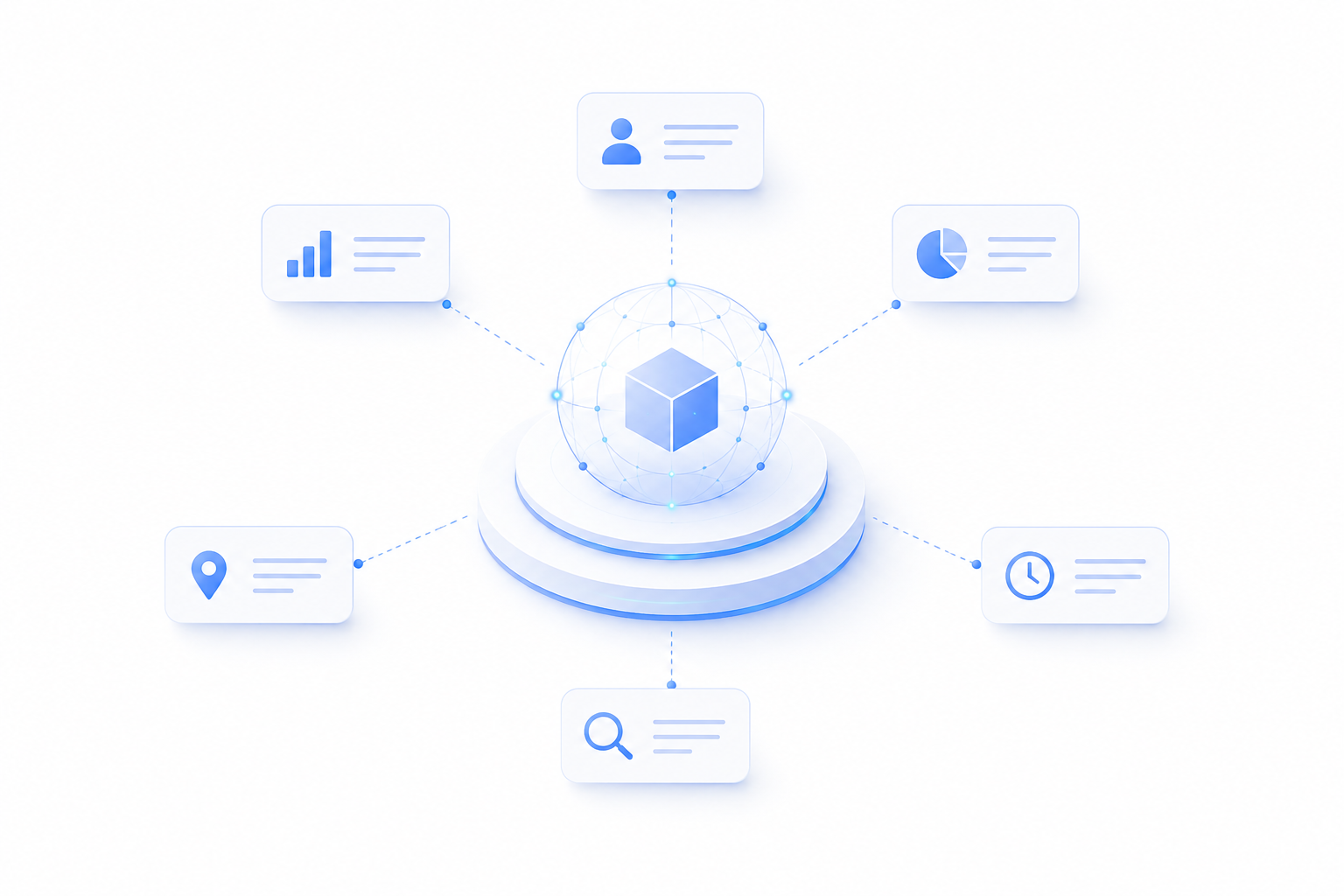
PIPER Modeler
organizes assets, processes, equipment, variables, and events into hierarchical operational models that give meaning to industrial data.
Contextualize Operational Data
4. Visualize and Analyze
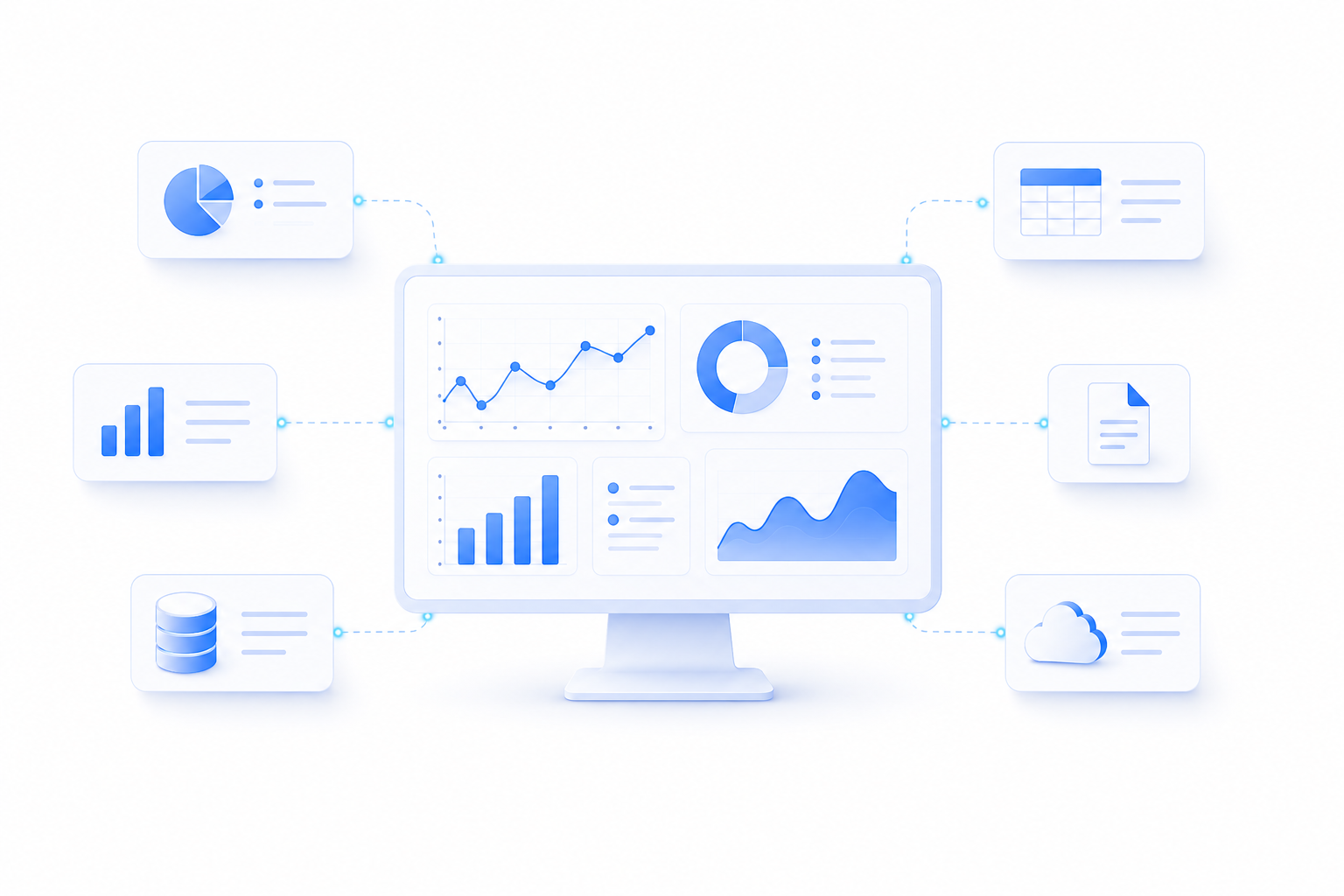
PIPER View
transforms contextualized data into dashboards, KPIs, trends, and reports for monitoring operational performance.
Visualize the behavior of your operations
5. Integrate and Extend
Excel
Excel Add-in that allows data extraction from Operational to Microsoft Excel and Excel 365, consult tag and event data with their respective retrieval methods and time range.
From Operational PIPER to Microsoft Excel
Rest APIs
REST API that allows connection with Business Modeler for querying and inserting data.
AI
Connect with industrial intelligence through our bidirectional connector, which allows you to retrieve real-time data from the PIPER infrastructure and perform advanced analysis in Jupyter Notebooks.
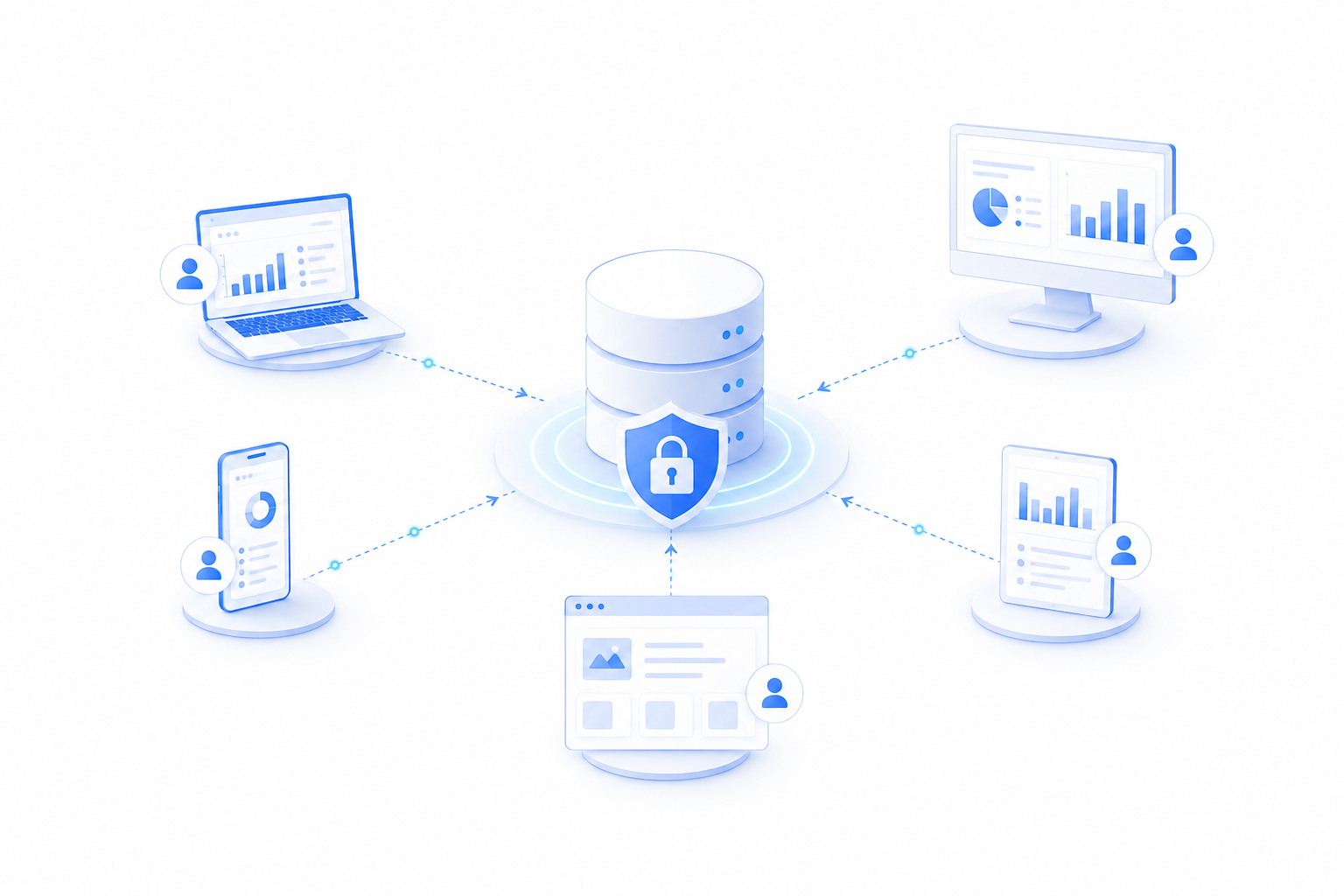
Built for Critical Industrial Operations
PIPER can be deployed on-premise, in the cloud, or in hybrid environments, adapting to the security, integration, and scalability requirements of each operation.
Benefits
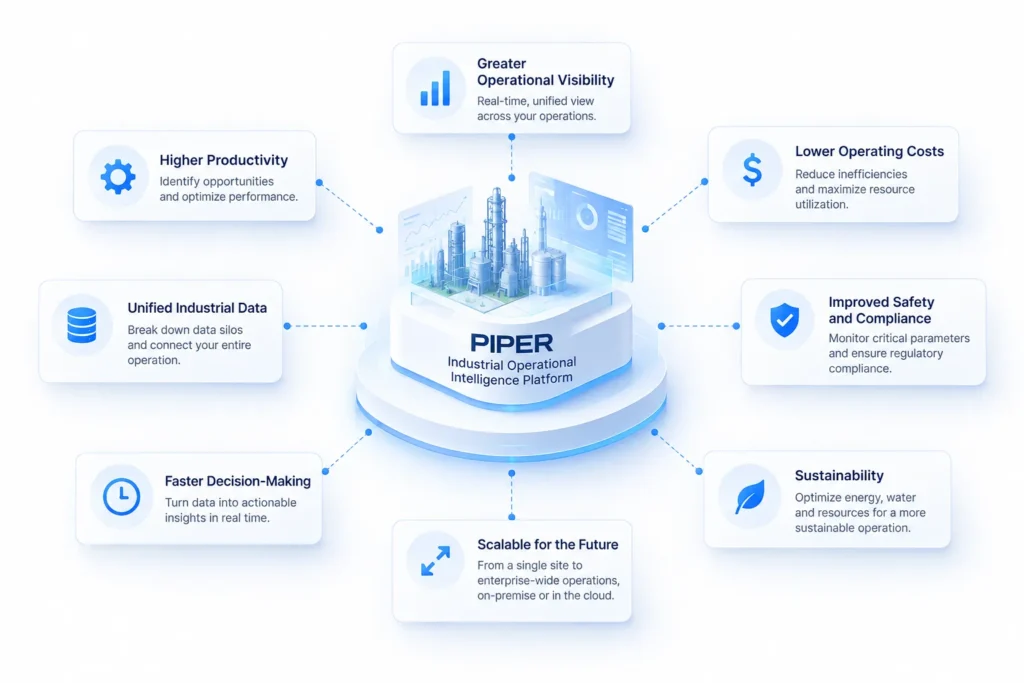
Benefits of an Industrial Operational Intelligence Platform
Real-Time Operational Visibility
Monitor production, assets, processes, and KPIs from a centralized view of your operations.
Contextualized Industrial Data
Relate variables, equipment, processes, and events to transform isolated data into useful operational information.
OT/IT Integration
Connect SCADA, PLCs, historians, ERP, laboratories, and other industrial systems without necessarily replacing existing infrastructure.
Advanced Operational Analytics
Use historical and real-time data to detect deviations, analyze causes, and identify opportunities for improvement.
Reduced Manual Work
Reduce the time spent consolidating information, preparing reports, and retrieving data from multiple systems.
Scalable Architecture
Start with a pilot and progressively expand to new lines, processes, or plants across cloud, on-premise, or hybrid environments.
Operational Solutions
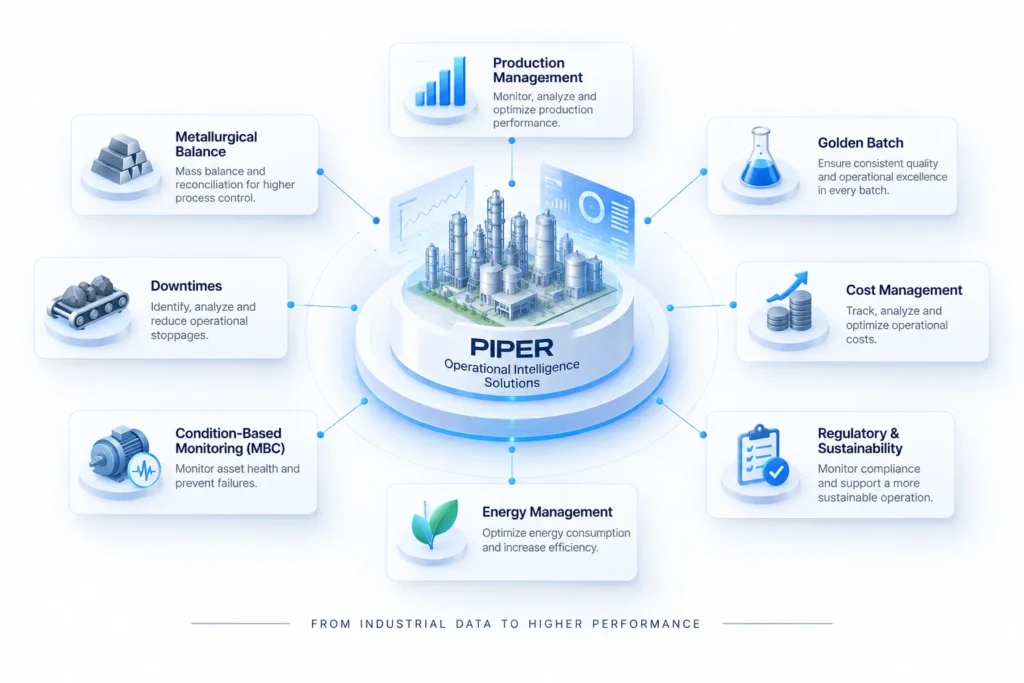
PIPER enables organizations to build operational solutions using contextualized industrial data, advanced analytics, and real-time visualization.
Production Intelligence
Monitor and optimize production, performance, and operational continuity through contextualized industrial data.
Downtime Intelligence
Detect, classify, and analyze downtime to reduce operational losses and improve asset availability.
Metallurgical Balance
Integrate metallurgical balances, data reconciliation, and recovery analysis to improve process control and performance.
Golden Batch
Compare production processes against reference batches to detect deviations and improve operational stability.
Condition-Based Monitoring
Combine operational models and advanced analytics to identify abnormal conditions and support proactive maintenance.
Energy Management
Centralize energy consumption, generation, and efficiency data to improve operational performance.
Industries
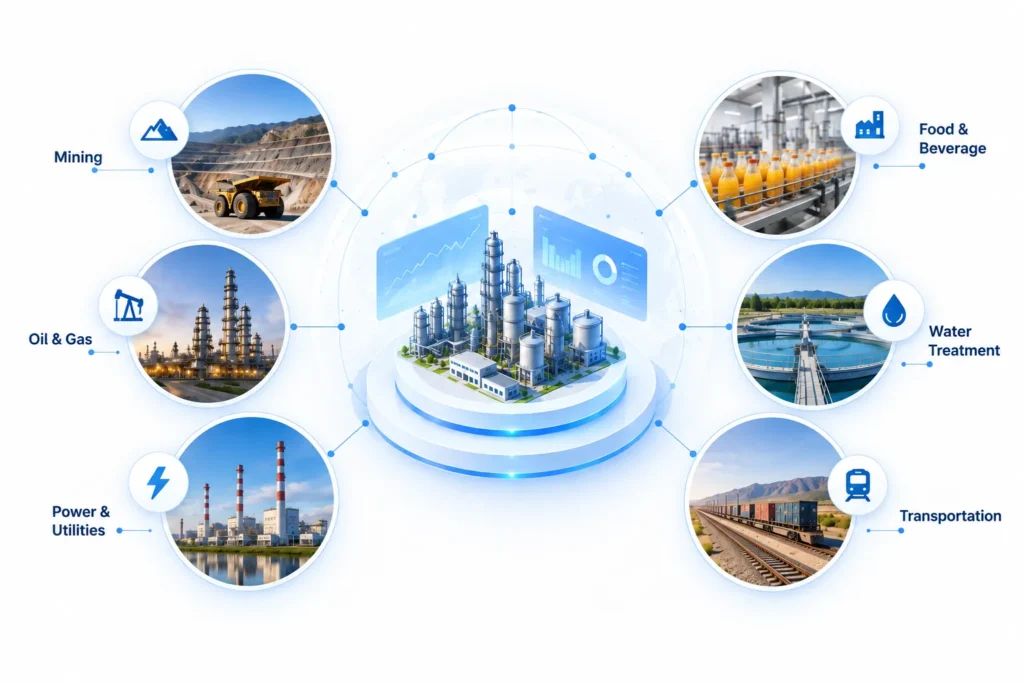
Industrial Operational Intelligence for Critical Industries
Mining
Improve operational visibility and control of critical processes to reduce production losses, optimize recovery, and maximize operational efficiency.
Energy
Improve generation, efficiency, and operational continuity through centralized visibility of critical infrastructure.
Oil & Gas
Integrate production, inspection, and operational data to improve traceability, monitoring, and data reliability.
Manufacturing
Connect production processes, equipment, and KPIs to reduce losses and improve industrial efficiency.
Water & Wastewater
Centralize process, quality, consumption, and performance data to improve operational control.
Frequently Asked Questions
Operational Models for Critical Industries
What is an Operational Intelligence Platform?
An Operational Intelligence Platform connects, stores, contextualizes, and visualizes industrial data to help organizations monitor and improve operational performance in real time.
Is PIPER an industrial historian?
PIPER includes PIPER Historian, a component specialized in storing and retrieving historical data. However, the platform also provides contextualization, visualization, analytics, and data access capabilities.
What is the difference between PIPER and a traditional historian?
A traditional historian primarily stores time-series data. PIPER adds an operational context layer that connects data to equipment, processes, events, and KPIs.
Can PIPER integrate with SCADA and PLCs?
Yes. PIPER Collector collects data from different industrial sources, including control systems, sensors, and other interfaces.
Can PIPER be deployed on-premise?
Yes. PIPER can be deployed on-premise, in the cloud, or in hybrid environments.
Can PIPER support production and maintenance solutions?
Yes. PIPER enables organizations to build operational solutions for production, downtime, metallurgical balance, energy, condition-based monitoring, and other industrial processes.
Is PIPER ready for industrial artificial intelligence?
Yes. Contextualized data can support advanced analytics, predictive models, and industrial artificial intelligence initiatives.
An Operational Intelligence (OI) Platform is a software infrastructure that centralizes, stores, contextualizes, and visualizes an industrial plant’s operational data in real time, enabling engineers, supervisors, and managers to analyze processes and make decisions without relying on manual reports or disconnected systems.
Unlike a control system (SCADA/DCS/PLC), which exists to operate the process in the present moment, or a traditional historian, which exists to store time-series data, an OI Platform integrates both roles and adds a critical additional layer: context. It takes raw data from multiple sources — control systems, IoT sensors, ERP, CMMS, laboratory systems, field forms — and organizes it according to the operation’s real hierarchy (plant → area → line → equipment → variable), so a data point stops being just a number with a timestamp and gains meaning: which asset it belongs to, which process it’s part of, and how it relates to other data.
This context layer is what enables the shift from “seeing data” to “understanding operations”: calculating indicators like OEE or metallurgical balance, detecting downtime and its root cause, comparing a batch’s performance against a reference batch (golden batch), or triggering an alert when a variable deviates from expected behavior.
At PIPER, this architecture is organized into four layers working together:
- PIPER Collector — collects real-time data from SCADA, PLCs, IoT sensors, and other sources, even under limited connectivity (edge computing).
- PIPER Forms — captures data that doesn’t come from automated instrumentation: inspections, manual readings, and ERP system information, integrating it into the same model as automated data.
- PIPER Historian — stores time-series data efficiently and with compression, enabling years of history without losing resolution where it matters.
- PIPER Modeler — builds the asset and process model, giving raw data context and hierarchy.
- PIPER View — visualizes all integrated information (automated and manual) through real-time dashboards and reports.
Collector and Forms work in parallel as the platform’s two data entry points — one for automated data, one for anything without instrumentation — and both converge into Historian before passing through Modeler and reaching View.
The result is a single operational source of truth, deployable on-premise or in the cloud, that serves both day-to-day analysis and broader digital transformation initiatives (digital twins, advanced analytics, predictive maintenance).
SERVICES
PIPER Solutions
PIPER delivers a comprehensive suite of operational intelligence services, enabling end-to-end data management across any industrial sector.
