
PIPER Modeler
Industrial Operational Modeling & Contextualization
Model, contextualize and analyze your industrial operation in a 100% web-based environment.
Build reusable models for assets, processes and events, connecting real-time and historical data with Analytics to create the operational context needed for advanced analytics and AI.
From industrial data to operational context — and from context to AI.
Everything You Need to Build Your Operational Model
PIPER Modeler provides the building blocks to structure, contextualize and analyze industrial operations in a single 100% web-based environment
Why PIPER Modeler?
Reusable Templates
Standardize recurring assets and Events.
Real-Time & Historical Data
Contextualize both live and historical information.
Built-in Analytics
Calculate operational information directly within the model.
Backfill
Recalculate Analytics across time.
Operational Events
Transform conditions into contextualized Events.
Multiple Solutions
Build Production, Energy, Maintenance, Quality, Downtime and other operational models.
AI-Ready Context
Provide structured operational context for advanced analytics and AI.
Create reusable structures that represent your assets, equipment, processes and operational entities
Element Templates
Reusable Asset Models
Create reusable templates that define the structure of recurring industrial assets.
Templates can associate:
Attributes · Traits · Analytics
Examples:
Pumps · Motors · Mills · Compressors · Conveyors · Tanks
Define once. Reuse across your operation.
Elements
Build Your Operational Hierarchy
Represent your industrial operation through a structured hierarchy.
Enterprise → Site → Plant → Area → Process → Equipment → Component
Each Element represents a real operational entity and can contain its own Attributes, Traits and Analytics.
Create a digital representation of your operation.
Transform isolated data points into structured information that represents what is actually happening in your operation.
Attributes
Turn Data into Operational Attributes
Define the properties, measurements and operational states of each Element.
Attributes can receive values from:
Real-Time Tags · Historical Data · Interpolated Values · Analytics
An attribute can also include its unit of measurement and category.
Turn raw values into meaningful operational information.
Units of Measurement
Give Data Physical Meaning
Associate Attributes with their corresponding units of measurement.
Examples:
°C · bar · t/h · MW · % · rpm
Units provide consistency and meaning across your operational model.
Standardize how operational values are interpreted.
Categories
Organize Your Operational Information
Group Attributes into logical categories to make operational models easier to manage and understand.
Examples:
Production · Energy · Condition · Quality · Maintenance
Structure information according to its operational context.
Retrieval Methods
Define How Data Is Retrieved
Control how Attributes obtain their values from the underlying data.
Values can be retrieved from:
Real-Time Data · Historical Data · Interpolation · Analytics
This allows each Attribute to represent the appropriate operational value for its context.
Connect the right data to the right operational attribute.
Traits
Add Operational Semantics
Traits add specific operational characteristics to Elements.
Limits
Define operating boundaries and thresholds.
Location
Define where an Element belongs within the operational structure.
Balance
Represent material, energy or process relationships.
Add the operational context that raw data cannot provide.
Once your operation is modeled and contextualized, PIPER Modeler allows you to execute analytical expressions and generate calculated information.
Analytics
Execute Operational Analytics
PIPER Modeler includes an Analytics engine with a comprehensive set of functions for executing expressions and performing operational calculations.
Use Analytics to:
- Execute analytical expressions
- Combine variables
- Create calculated Attributes
- Generate derived values
- Calculate KPIs
- Evaluate operational conditions
- Generate Events
Analytics can use real-time, historical and contextualized Attributes as inputs.
Calculate intelligence directly within your operational model.
Backfill
Recalculate Your Model Through Time
Backfill allows Analytics to be recalculated across a selected period.
Past ←──────── Now ────────→ Future
Use Backfill to:
- Recalculate historical values
- Reprocess calculations after changes
- Apply updated analytical logic
- Recover derived information
- Validate model changes
Keep your operational intelligence consistent as your model evolves.
Transform analytical results into contextualized Events and actionable Notifications.
Event Templates
Reusable Operational Events
Create reusable structures for recurring operational events.
PIPER Modeler includes predefined Event Templates for operational scenarios such as:
Downtime · Quality · Production · Maintenance
Event Templates can contain their own Attributes and operational information.
Standardize how your operation defines events.
Events
Turn Conditions into Contextualized Events
Generate Events when defined operational conditions occur.
For example:
Temperature > 90 °C
Duration > 5 min
↓
High Temperature Event
Events can include:
Asset · Location · Value · Limit · Duration · Severity
Instead of an isolated alarm, you have a contextualized operational event.
Turn operational conditions into meaningful information.
Notifications
Deliver Actionable Information
Transform relevant Events into Notifications for operators, engineers, maintenance teams or other applications.
Condition → Analytics → Event → Notification → Action
From detecting a condition to taking action.
Multiple Operational Models
Model your operation from different perspectives.
PIPER Modeler allows you to create multiple operational models using the same underlying industrial data.
Create models for:
Production
Energy
Maintenance
Metallurgical Balance
Downtime
Condition Monitoring
Costs
Performance
The same asset can participate in different operational models without duplicating the underlying data.
One data foundation. Multiple operational perspectives.
AI
PIPER Modeler transforms industrial data into structured operational context, giving AI the information it needs to understand assets, processes, conditions and events.
The Context AI Needs
Create AI-Ready Operational Context
Industrial AI needs more than large volumes of raw data.
It needs to understand:
What is the asset?
Where is it?
What process does it belong to?
What does the value mean?
What are its limits?
What conditions matter?
What happened?
PIPER Modeler structures this information through:
Elements + Attributes + Traits + Analytics + Events
This creates a contextualized operational layer that can be consumed by people, applications, analytics and AI.
From isolated data to AI-ready operational context.
From Raw Data to Operational Intelligence
Ejemplo
Tag
TT_2045 = 94.2 °C
↓
Element
SAG Mill 01
↓
Attribute
Bearing Temperature
94.2 °C
↓
Trait
Operating Limit = 90 °C
↓
Analytics
Deviation = +4.2 °C
↓
Event
High Temperature
↓
Notification
Maintenance Team
ADVANTAGES
Model, contextualize, and optimize industrial data in real time with greater agility than traditional platforms.
Operational Intelligence
Transform industrial data into real-time operational decisions
OT/IT Integration
Connect historians, SCADA, and enterprise systems through a unified platform.
Contextualized Data
Relate assets, processes, and production through intelligent operational context.
Operational Digital Twins
Build real-time operational models for industrial analysis and optimization.
Rapid Deployment
Fast and flexible deployments to accelerate operational results.
Scalable Architecture
Flexible for cloud, hybrid, and on-premise operations.
Operational Models
Operational Models for Critical Industries
Production
Contextualize KPIs, performance, and real-time production.
Metallurgical Balance
Centralize reconciliation and balances to optimize recovery and operational control.
Downtime Intelligence
Detect, classify, and reduce operational losses.
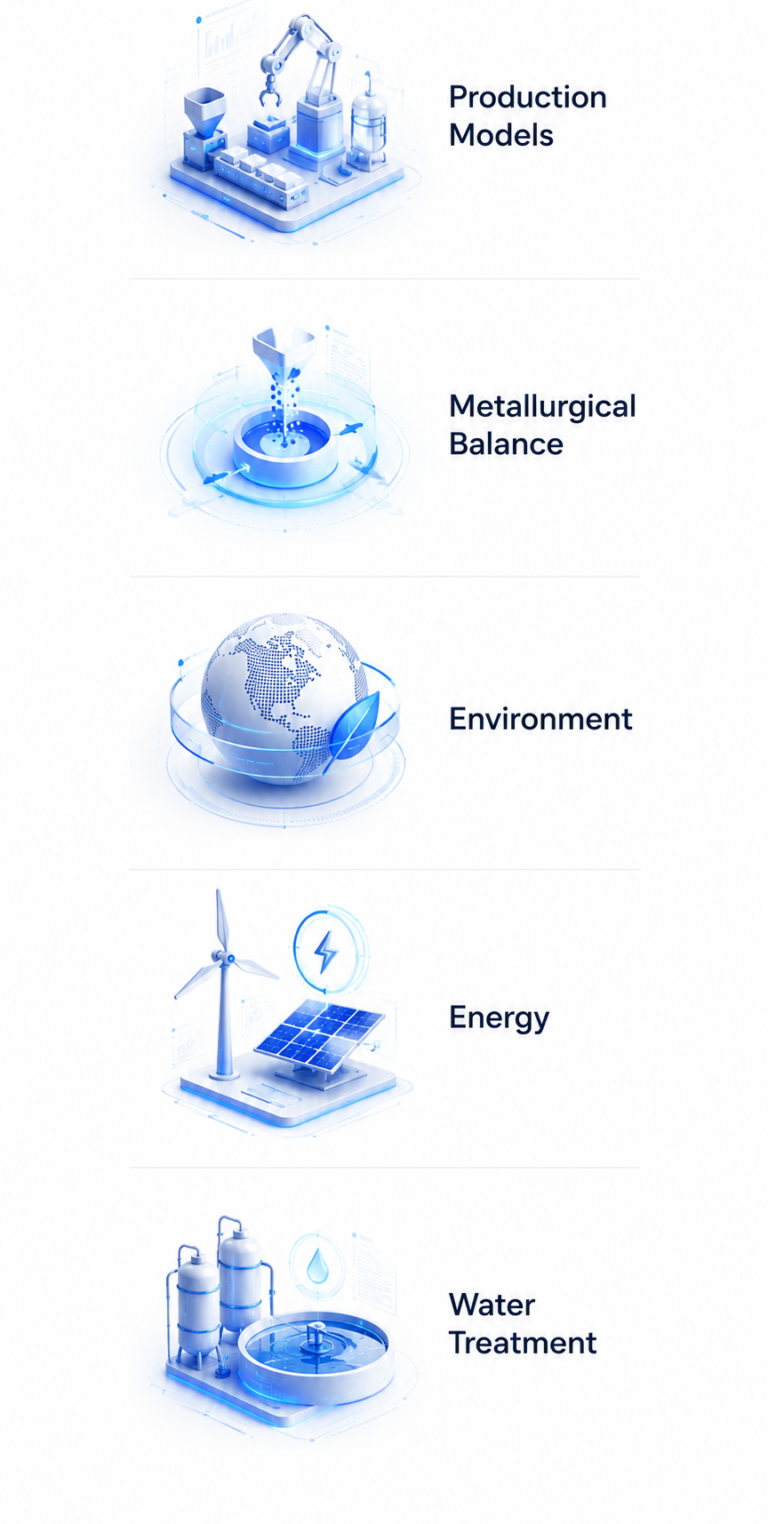
Environmental Monitoring
Monitor emissions and environmental variables in real time.
Water Management
Contextualize water processes, quality, and flow rates.
Energy
Integrate energy consumption, generation, and efficiency.
Modern VS Traditional Approach
Operational Models for Critical Industries
Traditional
- Disconnected data
- Traditional historian
- Complex structures
- Rigid integrations
- Limited analytics
Modern with PIPER
- Unified operational context
- Operational intelligence
- Modern operational models
- Flexible architecture
- AI and advanced analytics
Frequently Asked Questions
Operational Models for Critical Industries
What is PIPER Modeler?
PIPER Modeler is a 100% web-based industrial modeling and contextualization tool that structures assets, Attributes, Traits, Analytics and Events into reusable operational models.
Can Attributes receive values from real-time Tags?
Yes. Attributes can receive values from real-time and historical data using different retrieval methods, including interpolation. They can also receive values generated by Analytics.
What are Traits?
Traits add operational semantics to Elements, including Limits, Location and Balance
What is Backfill?
Backfill allows Analytics to be recalculated across a selected time period, making it possible to reprocess historical information when calculations or model definitions change.
How does PIPER Modeler prepare data for AI?
PIPER Modeler structures industrial data into Elements, Attributes, Traits, Analytics and Events, creating the operational context required by advanced analytics and AI applications.